How to Improve Indoor Air Quality in Your Washington Township, NJ Home This Summer
Why Indoor Air Quality Matters More in Summer
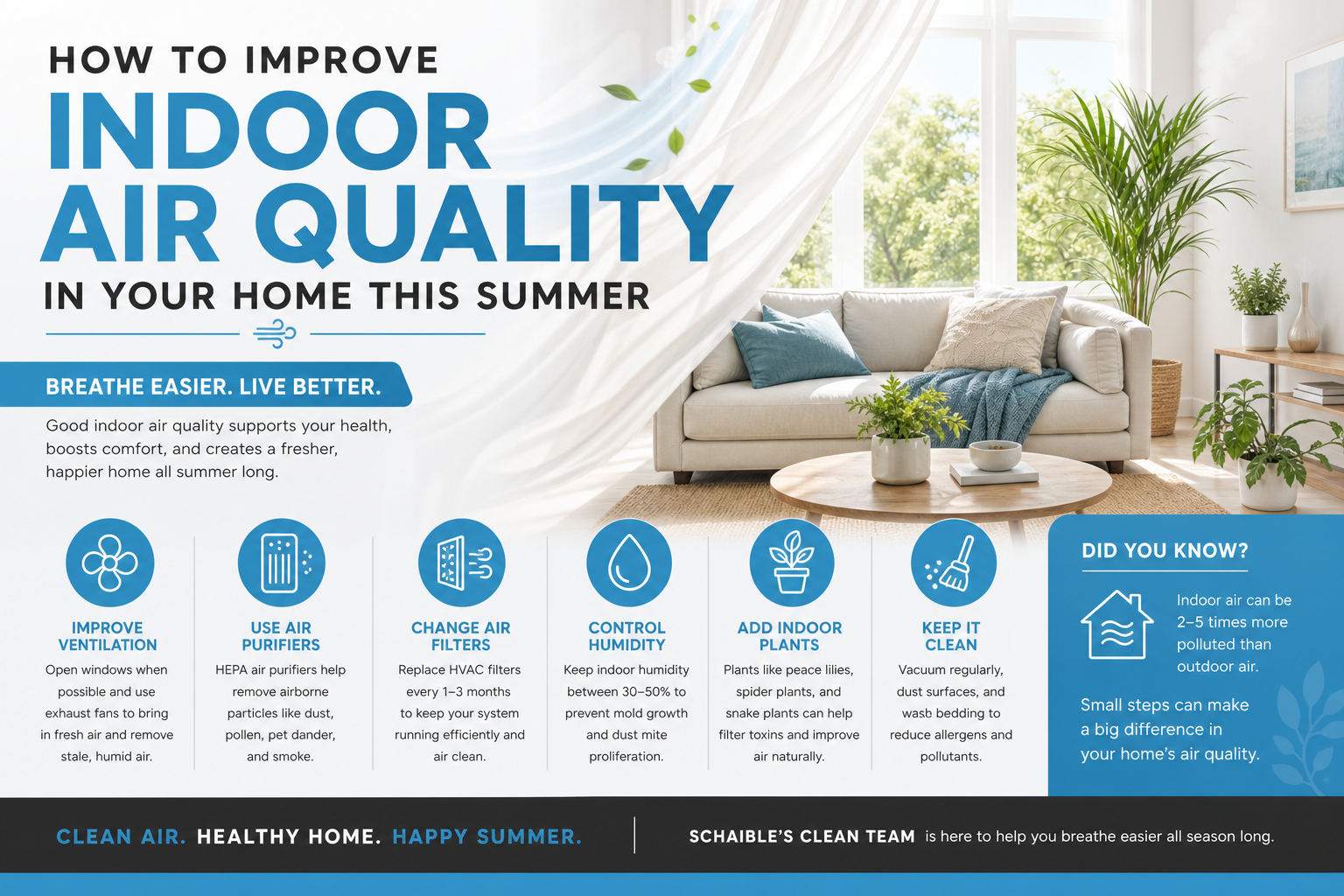
When summer arrives in Washington Township, NJ, most of us think about outdoor activities — hiking the trails at Merrill Creek Reservoir, visiting local farms, or enjoying a weekend at one of Warren County’s parks. What many homeowners don’t realize is that the air inside your home can be two to five times more polluted than the air outside, according to the EPA — and summer conditions in our area can make that even worse.
Warren County’s warm, humid July weather creates a perfect storm for indoor air quality issues. Higher humidity encourages mold and mildew growth. Open windows let in pollen, dust, and outdoor pollutants. And running your HVAC system constantly means every particle gets circulated through your home again and again.
The good news? With the right approach, you can dramatically improve the air your family breathes. Here’s a comprehensive guide to tackling indoor air quality — with practical advice tailored to homes right here in the Washington Township area.
Understanding Common Indoor Air Pollutants in NJ Homes
Before you can fix a problem, you need to understand what you’re dealing with. Here are the most common indoor air quality culprits in Warren County homes during summer:
- Pollen and outdoor allergens: Washington Township sits in a lush, wooded area of northwestern New Jersey. Oak, birch, and grass pollen counts peak in late spring and remain elevated through early summer.
- Mold and mildew spores: New Jersey’s summer humidity levels regularly exceed 70%, creating ideal conditions for mold growth in bathrooms, basements, and anywhere moisture collects.
- Dust mites: These microscopic creatures thrive in warm, humid environments. Bedding, upholstered furniture, and carpeting are their favorite habitats.
- Volatile Organic Compounds (VOCs): Paint, cleaning products, air fresheners, and even new furniture release chemicals that degrade air quality. Heat accelerates VOC off-gassing.
- Pet dander: If you have pets, summer shedding increases the amount of dander circulating through your home.
- Cooking byproducts: Summer cooking — especially frying and grilling indoors — produces particles and gases that affect air quality.
Start With Your HVAC System: The Lungs of Your Home
Your heating and cooling system filters every cubic foot of air in your home multiple times per day. If it’s not maintained properly, it becomes part of the problem rather than the solution.
Essential HVAC Maintenance for Better Air Quality
- Change your air filter monthly during summer: When your AC runs constantly, the filter clogs faster. A dirty filter restricts airflow and lets particles pass through. For Washington Township homes surrounded by trees, consider upgrading to a MERV 11 or higher filter.
- Schedule professional duct cleaning: Over time, dust, mold, and debris accumulate in your ductwork. If you notice musty smells when your system kicks on, it’s time for a cleaning.
- Check for leaks in ductwork: Leaky ducts can pull in air from attics, crawl spaces, and wall cavities — areas that often harbor mold and insulation particles.
- Keep vents clear: Make sure furniture, rugs, and curtains aren’t blocking supply and return vents. Restricted airflow reduces filtration effectiveness.
- Consider a whole-house air purifier: These integrate with your HVAC system and can remove particles, allergens, and even some VOCs from circulating air.
Control Humidity: Warren County’s Biggest Challenge
Humidity is arguably the single biggest factor affecting indoor air quality in Washington Township homes during summer. When indoor humidity rises above 50-60%, it creates conditions where mold, mildew, and dust mites flourish.
Strategies to Manage Indoor Humidity
- Use a dehumidifier: In basements and lower levels — especially common in Washington Township’s older homes — a dehumidifier is essential. Aim to keep humidity between 30% and 50%.
- Run bathroom exhaust fans: Always use exhaust fans during and for at least 20 minutes after showers. In summer, the extra moisture from bathing gets trapped more easily.
- Vent your dryer properly: Make sure your dryer vents to the outside, not into your laundry room or basement. A blocked or disconnected dryer vent adds a significant amount of moisture to your home.
- Fix leaks immediately: Even small plumbing leaks create persistent moisture that leads to mold growth. Check under sinks, around toilets, and near water heaters regularly.
- Use your kitchen exhaust fan: Cooking generates both moisture and airborne particles. Run the fan while cooking and for a few minutes afterward.
- Monitor humidity levels: An inexpensive hygrometer (available at any hardware store) lets you track humidity room by room so you can address problem areas.
Deep Cleaning for Cleaner Air
Regular cleaning doesn’t just make your home look better — it directly improves the air you breathe. Dust, pet dander, pollen, and mold spores all settle on surfaces and get stirred up every time someone walks through a room or sits on the couch.
Cleaning Practices That Improve Air Quality
- Vacuum with a HEPA filter: Standard vacuums can actually make air quality worse by blowing fine particles back into the air. HEPA-filter vacuums trap 99.97% of particles down to 0.3 microns.
- Dust with damp cloths: Dry dusting pushes particles into the air. A slightly damp microfiber cloth captures and holds dust instead of spreading it.
- Wash bedding weekly in hot water: This kills dust mites and removes allergens. In summer, dust mite populations can increase significantly in Warren County’s warm climate.
- Clean upholstery regularly: Sofas, chairs, and curtains collect allergens over time. Vacuum upholstered furniture weekly and have it professionally cleaned at least once a year.
- Don’t forget ceiling fans: Dusty fan blades distribute allergens every time you turn them on. Wipe down blades at least monthly during summer.
- Mop hard floors after vacuuming: Vacuuming picks up loose particles; mopping captures what’s left behind. Use a damp mop with a gentle cleaner.
If keeping up with this level of cleaning feels overwhelming — especially during summer when you’d rather be enjoying the weather — a recurring cleaning service can ensure your home stays consistently clean and your air stays fresh.
Room-by-Room Air Quality Improvements
Bedrooms
You spend roughly a third of your life in your bedroom, making it the most important room for air quality. Beyond regular cleaning:
- Use allergen-proof mattress and pillow covers
- Keep bedroom doors open during the day to promote airflow
- Remove or minimize upholstered items that collect dust (decorative pillows, heavy drapes)
- Keep pets out of bedrooms if allergies are a concern
Bathrooms
Moisture control is everything in bathrooms. In addition to running exhaust fans:
- Squeegee shower walls after each use to reduce moisture
- Wash bath mats and towels frequently — they’re breeding grounds for mold in humid weather
- Check caulking around tubs and showers; replace if cracked or showing mold
- Leave the bathroom door open after showering to improve air circulation
Basements
Many Washington Township homes have basements that can feel damp in summer. These below-grade spaces are ground zero for mold and musty odors.
- Run a dehumidifier continuously during summer months
- Check for water intrusion after heavy rain (Warren County sees regular summer thunderstorms)
- Avoid storing cardboard boxes directly on the floor — use plastic bins on shelving
- Inspect foundation walls for cracks that allow moisture seepage
Kitchen
- Clean the range hood filter monthly — grease buildup reduces its effectiveness
- Empty trash daily in summer to prevent odors and reduce VOC off-gassing from waste
- Store food in airtight containers to prevent both pest issues and food odors
- Clean under and behind the refrigerator — dust on coils affects both air quality and energy efficiency
Natural Ways to Freshen Indoor Air
You don’t need expensive equipment or chemical air fresheners to improve your home’s air. Some of the most effective methods are simple and natural:
- Strategic ventilation: Open windows during early morning or late evening when pollen counts are lower and temperatures are cooler. Cross-ventilation — opening windows on opposite sides of the house — creates effective airflow.
- Houseplants: While they won’t replace an air purifier, certain plants like spider plants, peace lilies, and snake plants can help filter some airborne toxins. They also add moisture control benefits.
- Beeswax candles: Unlike paraffin candles (which release chemicals), beeswax candles produce negative ions that can help neutralize pollutants.
- Activated charcoal: Small bags of activated charcoal placed in closets, bathrooms, and musty areas absorb odors and moisture naturally.
- Essential oil diffusers: Used sparingly, essential oils like eucalyptus, tea tree, and lavender can freshen air without the synthetic chemicals found in commercial air fresheners.
When Professional Cleaning Makes the Difference
Improving indoor air quality is an ongoing effort, and regular professional cleaning is one of the most effective tools in your arsenal. A thorough deep cleaning service reaches the areas that daily maintenance misses — under furniture, inside light fixtures, on top of cabinets, and in all the corners where dust and allergens accumulate over months.
For families in Washington Township dealing with allergies, asthma, or simply wanting a healthier home environment, combining regular professional cleaning with the strategies above can make a remarkable difference in how your home feels and how your family breathes.
Schaible’s Clean Team provides professional house cleaning throughout Warren County, NJ, including Washington Township, Hackettstown, Phillipsburg, Belvidere, and all surrounding communities. Our detailed cleaning process is designed to remove the dust, allergens, and buildup that affect your home’s air quality — not just make surfaces look clean.
Want a healthier home this summer? Request a free quote from Schaible’s Clean Team today, or give us a call to discuss how our cleaning services can help improve the air quality in your Washington Township home.
Share this article
Related Posts


Follow us
A quick overview of the topics covered in this article.